Showing posts with label Biography. Show all posts

Saturday, 24 August 2013

Avenged Sevenfold: Tapping its partnership with gaming franchise 'Call of Duty,' Avenged Sevenfold is poised for big things with the old-school metal wallop of "Hail to the King"


Last October, metal five-piece Av­enged Sevenfold scored perhaps the biggest booking of any musical act outside of the Grammys.
It wasn't an awards show, it wasn't a festival date-it wasn't even a physical appearance. Instead, the band appeared in animated form during the end credits of Activision's "Call of Duty: Black Ops II," performing a custom-made song called "Carry On" and becoming part of videogame history in the process. In its first 15 days of release, "Black Ops II" became the fastest-selling game to pass the $1 billion mark and the largest entertainment launch in Hollywood history, exposing Avenged Sevenfold to millions of fans in the process. A YouTube clip of the band's cameo has racked up 6.2 million views. Not bad for a band that refuses to play the talk-show circuit.

"I don't want the fair-weather fans, the soccer moms who watch 'Jimmy Kimmel' to discover us that way," says Sevenfold lead singer Matt Sanders, who performs as M. Shadows. "I want the people who grew up listening to AC/DC and Slayer, and if we can figure out the right way to have those people see a snippet of what you'd see at a festival or a live show, we'll do it."
Though "Carry On" was physically released this year only as a Record Store Day exclusive-selling 3,000 copies, according to Warner Bros. Records marketing assistant Jamil Baldwin-it set a dramatic precedent for Hail to the King, the band's sixth album and most cinematic in scope to date. Opener "Shepherd of Fire" has a 70-second introduction filled with brooding brass, crunchy riffs and heart-racing drums so ripe for an action movie that "Call of Duty" publisher Treyarch immediately selected it to score a key scene in "Apocalypse," the fourth and final download pack for "Black Ops II." And in a serendipitous synchronizing of marketing rollouts, "Apocalypse" arrives the same day as "Hail to the King." That could give the album an extra exposure boost to help it beat the first-week sales of the band's last outing, "Nightmare," which entered the Billboard 200 at No. 1 in August 2010 with 163,000 copies, Avenged Sevenfold's best sales week to date, according to Nielsen SoundScan.
Other musicians have been a part of "Call of Duty"-Trent Reznor composed the theme music for "Black Ops II," and Eminem just debuted his first single in three years in the trailer for upcoming "threequel" "Ghosts." But few have had the in-game exposure, and real-life camaraderie with the publishers, as Avenged has. Treyarch studio head Mark Lamia first tapped the band in 2011 for a zombie-themed "Call of Duty" update dubbed "Call of the Dead"-the result of a frenzied search to find the right band that could create an original song in a rather tight three-month time frame.
"Up until that point, we had composed all our signature songs with our composer Kevin Sherwood, and it was very metal-influenced and built kind of a cult following," Lamia recalls. "We wanted to see what we could do with a band, and it didn't take long before there was an Avenged Sevenfold CD in here. I met with Matt, and it became clear that he was very ­serious about 'Call of Duty' and had a passion for the franchise and loved it and got what we were trying to make. It was one of those meetings where everything came together."
Not only did the initial meeting result in a brand-new Avenged Sevenfold track ("Not Ready to Die") to score the zombie slaughter-not to mention a later use of Nightmare for one of the game's expansion packs-a more personal relationship emerged. Today, Lamia and Shadows go to Laker games together, trade advice as new fathers and attend Major League Gaming tournaments. In June, Shadows attended his first MLG Spring Championship in Anaheim, Calif., as both a spectator and competitor, only to see his team's beaten-by-the-clock elimination voted one of the event's "Top Fails."

Shadows' passion for gaming extends to the road, too, as each concert has a custom-built room known as "Fort Knox" for him to play Xbox before shows. "Matt was telling me when he was recording Hail to the King he was playing the original 'Black Ops,'" Lamia says. "We're both marrying our passion to our work. He's marrying his passion with the music, and we get to work with this amazing, accomplished act and it's a real, genuine collaboration. The respect that comes with that and being able to work with those guys is pretty awesome."
The culture around first-person shooter games has been a part of every step of "Hail to the King"'s marketing rollout, beginning with a series of game-like scavenger hunts held in key venues around the world in New York, Rio de Janeiro, Helsinki, London, Stockholm and Berlin. Using the band's official Twitter account (@TheOfficialA7X; 926,000 followers), an augmented-reality app and media partners like Revolver magazine, Avenged Sevenfold dropped clues in real-world locations where fans could unlock the album's title, artwork and release date, and additional special prizes.
The Brazil version gave five fans a pair of tickets to Rock in Rio. The New York version led fans to a studio where the band was mixing the album, allowing a very devoted group to hear the new music months before anyone else. Additional contests gave fans tickets to a free show at Los Angeles' Palladium on Aug. 26, the eve of the album's release.

Chennai Express speeds ahead, becomes highest grosser of 2013

More Photo
After breaking records overseas and becoming the fastest Rs. 100 crore grosser, SRK starrer Chennai Express is now the biggest grosser of 2013. It is also the third biggest grosser of all times in India.
Trade analyst Taran Adarsh tweeted on Wednesday: "#ChennaiExpress crosses #YJHD...
Becomes the BIGGEST grosser of 2013 thus far... THIRD BIGGEST grosser of all times in India."
Rs 200 cr club ahead
The film is also on the brink of reaching Rs. 200 crore soon. "#ChennaiExpress [Week 2]: Fri 6.50 cr, Sat 8.51 cr, Sun 10.22 cr, Mon 3.80 cr, Tue 7.06 cr. Grand total: Rs. 192.85 cr nett. FANTABULOUS!" Tweeted Adarsh 
 
HIT EXPRESS: SRK, Deepika in Chennai Express


Overseas reception"In US-Canada, Chennai Express stands behind Aamir's 3 Idiots which continues to hold the highest Opening Week record at $ 3,626,536," according to Bollywood Hungama.

"In the UK, surprisingly, its SRK starrer My Name Is Khan which continues to hold the highest BO record at £1,511,602. In Australia, again it's My Name Is Khan leading the pack with the collection of A$ 588,738 followed by 3 Idiots which collected A$ 556,000. And finally, coming to New Zealand, it is Salman Khan starrer Ek Tha Tiger that rules the top position with NZ$ 176,143 w.r.t. the comparison between movies mentioned in this chart. However, it is Akshay starrer Housefull 2 which has the highest BO record in NZ with a collection of NZ$ 258, 598," added Hungama.

Star speak

SRK is excited about his film's success. He told Hindustan Times: “I am quite amazed."

“It’s not just places in India — like Bihar or Mumbai or other places where I (usually) get a good reaction from the audience in the movie theatres. (I’ve got reactions) from Mauritius to Montana (USA). When you get calls from America, London, South Africa and Peru… it’s quite cool,”  SRK added.

Shah Rukh adds, “I am surprised by a lot of the overseas reactions, to be honest. Overseas (audiences) normally tend to like basic love stories, or that is what everyone thought. So I am quite amazed. I am now very confident about the film."

But is SRK repeating his 'Raj' act?
Shubhra Gupta of Indian Express writes in her column. "Chennai Express is back to re-revisiting the template of the 18-year-old Dilwale Dulhaniya Le Jaayenge that most beloved of Shah Rukh hits, which is also a monstrous albatross: how many more times can he credibly play a dulha wanting to take his dulhaniya away?" While we concur with her, we would like to know your opinion. Take this poll and tell us.


Claude Debussy celebrated with a Google Doodle

Google has marked the 151st anniversary of the birth of the composer Claude Debussy with a musical “doodle”. 

Visitors to the home page of the search engine are today greeted with an animated, moonlit scene of an old-fashioned street.

Set to Clair de Lune, one of the Frenchman’s most celebrated pieces, streetlights and house lights flicker on and off while cars and boats glide serenely by.
The Google Doodle ends as two boats cross paths and their occupants share a red umbrella beneath the falling rain.
Debussy was born on August 22, 1862, in Saint-Germain-en-Laye and died on March 25, 1918, in Paris.
One of his country’s best known composers, he developed a new system of harmony and musical structure that in many ways reflected the ideals the contemporary Impressionist and Symbolist painters and writers espoused.
But he rejected the label “impressionist,” insisting on one occasion: “I am trying to do 'something different'...what the imbeciles call 'impressionism', a term which is as poorly used as possible, particularly by the critics.”
Besides Clair de lune, his other best known works include Prélude à l’après-midi d’un faune, from 1894, the 1902 opera Pelléas et Mélisande, and La Mer, from 1905.
The title Clair de lune, which means moonlight, refers to a folk song that was used as the traditional accompaniment to scenes of the love-sick Pierrot character in the French pantomime.
The piece forms the third movement of Debussy’s Suite bergamasque, which dates from 1890 to1905.
The composer had a series of high profile love affairs and left his wife, Rosalie Texier, for a woman called Emma Bardac.
He was diagnosed with cancer in 1909.

What new Batman Ben Affleck brings to Dark Knight legacy


Batman vs. Superman
Superman and Batman will team up in an as-yet-untitled movie sequel to this year's "Man of Steel." The actors and their characters:
Oscar-winning actor dons the cowl for a 'Man of Steel' sequel, to mixed reactions.

Holy mixed reactions, Batman.
A flurry of activity on social media and in pop-culture circles ignited Thursday night when Warner Bros. announced Oscar-winning actor Ben Affleck as the newest guy to take the cape, cowl and mantle of the Dark Knight and his billionaire secret identity as Bruce Wayne.
Affleck will make his first appearance in the Man of Steel sequel opposite Henry Cavill as Superman, slated to open July 17, 2015.
Fans in favor of the move used hashtags such as "#Batfleck" to voice their approval of Affleck joining the list of Batman actors, which includes (most recently) Christian Bale, George Clooney, Val Kilmer, Michael Keaton and, on TV, Adam West. Others were more snarky about the casting, opining with "#BetterBatmanThanBenAffleck."

According to social-media research film Fizziology, 71% of the 96,088 tweets in the first hour after the news broke were negative. Of those, 12% wanted Bale to return as the Dark Knight and 10% referenced Affleck's previous superhero role in 2003'sDaredevil.
But Affleck played the blind Marvel Comics superhero in "a superhero-moviemaking mind-set we've moved light years beyond," says Scott Beggs, managing editor of the film website FilmSchoolRejects.com. "Ultimately, it was a bad movie for a lot of reasons. Fans should not resort to decade-old Hollywood math to assume that Affleck can't pull off wearing a cape."
Earlier this summer, eagle-eyed moviegoers had a clue where Man of Steel director Zack Snyder was taking things with the blink-and-you'll-miss-it inclusion of a Wayne Industries satellite in a scene above the Earth. And at Comic-Con in July, Snyder announced that the Caped Crusader would be in the Man of Steel follow-up, adding that the antagonistic Batman/Superman relationship from Frank Miller's seminal comic The Dark Knight Returns would inform the new film.
"Ben provides an interesting counterbalance to Henry's Superman," Snyder says. "He has the acting chops to create a layered portrayal of a man who is older and wiser than Clark Kent and bears the scars of a seasoned crimefighter, but retain the charm that the world sees in billionaire Bruce Wayne."
Peter Sciretta, editor-in-chief of the movie site slashfilm.com, thinks it's telling that Snyder chose a 41-year-old for his Batman. Chances are the character will be much different from the one in the Christopher Nolan and Tim Burton movies, Sciretta says, and Affleck could thrive in the role of an older, more conflicted vigilante millionaire.
"In Man of Steel, Superman was so careless in that final battle, letting much of Metropolis end in ruin, allowing so many civilian casualties," Sciretta says. "The fate of Metropolis was a big problem a lot of fans had with the film, and I expect that that destruction will be a huge part of why Batman will be hunting down Superman in this next film."
From a business perspective for Warner Bros., "it makes a lot of sense to have Affleck in that fold not only as an actor but possibly as a director in future installments," says Jeff Bock, senior box-office analyst for Exhibitor Relations. "When you look at the big picture, it's exactly the right choice."
Affleck was an "unsurprising shock" to Beggs. He thought Warner Bros. would go younger for a new take on the 74-year-old DC Comics icon. But it made sense, Beggs says, and Affleck's performances in Argo,The Town,Company Men and Boiler Room show that he at least has the acting chops for the role.
"They're enough to make us believe he'll do a strong job in the role, which is one that requires he play both a square-jawed billionaire playboy — which I think no one is going to argue that he doesn't have down, since he is a square-jawed millionaire playboy at least — and also a brooding crime-fighter with a rodent-shaped chip on his shoulder," Beggs says.
He feels Affleck will fall somewhere between Keaton and Bale in the legacy of Batman thespians.
"He can pull off the emotion of the father issues and the loss issues and the isolation without coming off like a jerk the way that Bale's Bruce Wayne tended to come off," Beggs says. "That was a huge dichotomy and a big gulf between the Batman and the Bruce Wayne characters there, and I see Affleck able to pull off a tighter balance between debonair and then also formidable as a fighter."
There is also a lot of goodwill in Hollywood and positive vibes off of Affleck's recent career resurgence, Bock says. That night earlier this year when the Argo director ended the Academy Awards ceremony with a best-picture Oscar in his hands, "he was the most popular man in town and in some respects still is the hottest director in town. If you put him in your film, it's going to make it that much better.''
His ascendence mirrors in a way what Iron Man star Robert Downey Jr. has done in the movies of Marvel Studios. While DC and Warner Bros.' superhero rivals still have the upper hand in terms of box office and influence — Man of Steel did well this summer, but Iron Man 3 did better — adding Affleck as a building block to the foundation of a DC cinematic universe and not rushing to a multi-superhero Justice League movie is the right decision, Beggs says.
What could be interesting, though, is that the sequel will be a Superman-centric movie. Yet Batman is arguably a more popular character and the guy under the cowl is a lot more recognizable worldwide than the guy with the "S" on his chest.
"It'll be undeniably a challenge for Cavill onscreen to do the scene work with Affleck," Beggs says. "But Affleck's also proven that he's an actor's actor and an actor's director. He can bring a lot of knowledge and storytelling wisdom."
Affleck's notoriety, however, is a drawback for Jill Pantozzi, an associate editor for geek-culture site TheMarySue.com.
"He's too big a name and too recognizable as 'Ben Affleck.' How many iconic roles has he actually brought to life?" she asks. "All I see is him onscreen instead of the character he's playing. That's not always a bad thing, but in this case I'm worried it will hurt the film. He'll probably pull off Bruce Wayne's public persona well, but I'm not so sure about his private one, or Batman."
Affleck's fellow celebs shared their reactions on social media, including Affleck's' longtime pal — and Batman fanatic himself — Kevin Smith. "Do you what this means? It means that I've seen Batman naked!!!" tweeted the filmmaker and Affleck's director on Chasing Amy,Mallrats and Jersey Girl.
Richard Dreyfuss joked, "You read for a part, you feel good about it, you feel confident, then they cast Ben Affleck." Comedian Patton Oswalt said he hopes Affleck "fights the Joke-ah! #wickedpissah," referring to the actor's penchant for on-screen Boston accents. And 30 Rock star Judah Friedlander remarked that "I cannot play Batman. I beat up Batman so badly, he applied for a transfer to Marvel Comics."
Even "The Batman" on Twitter chimed in. And he was not kind: "Ben Affleck officially cast as Batman in the Man of Steel sequel. For the first time in history, I kind of want Superman to win."
Heidi MacDonald of the comics-culture site The Beat says that, "like many internet casting outcries, this one will die down in the intervening two years. He certainly has the good looks, height and strong chin required for wearing the cowl.
"I mean, it could have been Nicolas Cage."

Tuesday, 20 August 2013

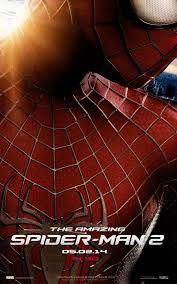
New ‘Amazing Spider-Man 2′ Photos Include Sinister Six Tease

Amazing Spider-Man 2 Giamatti gun

Okay, now they’re just screwing with us. For months, director Marc Webb has been teasing fans about what’s going to happen in The Amazing Spider-Man 2 via his Twitter feed. Then he brought some very cool footage to Comic-Con and hinted at other heroes joining Spider-Man and maybe even the formation of the Sinister Six, a super-team of Spider-Man’s greatest foes.
The first of three Spider-sequels doesn’t hit theaters until May 2014 but a few new photos have surfaced online. Most are things we’ve seen before but one of feels like Sony is trolling some fans. You’ll see what we mean below.
Thanks to Coming Soon for the images.
But it’s that’s last photo that raises the questions. That’s producer Avi Arad sitting under a sign that says “Sinister 6.” There are two likely scenarios here. The first is that it’s just a coincidence. That some building has those words on it (for one reason or another — could that be a stage where the film Sinister was shot, for example?) and Arad and the photographer staged the photo. If that’s not the case, it’s a photoshop, which would be even funnier.
Either way, it’s an official acknowledgement by the Spider-Man film makers that yes, we know putting Electro, Rhino and Harry Osborn into one movie begins to hint at something that might come in a future Spider-Man movie. And that’s something.
 What are your thoughts on this images?

The Amazing Spider-Man 2

Release Date: May 2, 2014 (3D/2D theaters)
Studio: Columbia Pictures (Sony)
Director: Marc Webb
Screenwriter: Alex Kurtzman, Roberto Orci, Jeff Pinkner, James Vanderbilt
Starring: Andrew Garfield, Emma Stone, Jamie Foxx, Dane DeHaan, Colm Feore, Paul Giamatti, Sally Field, Chris Cooper, B.J. Novak, Sarah Gadon
Genre: Action, Adventure
MPAA Rating: Not Available
Official Website: TheAmazingSpiderMan.com
Review: Not Available
DVD Review: Not Available
DVD: Not Available
Movie Poster: Not Available
Production Stills: View here

Plot Summary: In "The Amazing Spider-Man 2," for Peter Parker (Andrew Garfield), life is busy – between taking out the bad guys as Spider-Man and spending time with the person he loves, Gwen (Emma Stone), high school graduation can't come quickly enough. Peter hasn't forgotten about the promise he made to Gwen's father to protect her by staying away – but that's a promise he just can't keep. Things will change for Peter when a new villain, Electro (Jamie Foxx), emerges, an old friend, Harry Osborn (Dane DeHaan), returns, and Peter uncovers new clues about his past.

Monday, 19 August 2013

Biography Barbara Nessim

Barbara Nessim’s career stands as a kind of time capsule
of a transitional moment animated by people who remain permanently young, forward-looking, contrarian, and individualistic. Barbara Nessim: An Artful Life, a new volume out from Abrams, provides a compilation of the illustrator’s vivid graphic design, drawings, photographs, and documents. It’s at once a cultural history, a biography, and a portrait of New York’s fertile creative milieu in the 1970s, in particular.

An essay by the book’s editor, David Galloway, and an interview with art historian Matthew Israel elaborate
The Bronx raised Nessim, now 74, attended Pratt (against her father’s wishes; her mother paid), and she took courses there with German Pop artist Richard Lindner and French artist-writer Tomi Ungerer both of whom, like Nessim, played at the edges of illustration, decoration, and high art.


Nessim later found herself enamored with technology. Galloway (Wuppertal correspondent for ARTnews) discovered her work in the 1980s, first attracted by her computer graphics. “Where many artists and technicians were in love with their tools and wanted to show off their savvy,” he says, “she was using the new electronic tools to produce thematically rich works of high esthetic standards.”

Nessim roomed for some six years with women’s liberation spokesperson Gloria Steinem, but was not herself a hardcore feminist, although her concerns certainly touch on women’s issues. Her drawings of Wonder Woman type characters their pudenda exposed prominently with no pubic hair spoke to a strange freedom of expression. Her “WomanGirl” series describes Twiggy-like, innocent, and confidently explicit characters. (Several of these were on view earlier this year in Nessim’s retrospective at the Victoria and Albert Museum in London.)

Nessim’s designs include delicate black-and-white line drawings that appear part Aubrey Beardsley, part George Grosz, part Louise Bourgeois, and have an almost writerly quality when they’re not psychedelic and bold, like her covers for New York and Rolling Stone. For that work, she’d mix hard mechanical shapes with soft human ones.

And commercial art is not beneath her. As she tells designer-journalist Steven Heller, “It was always puzzling when people compared illustrating to prostitution.” She proudly did a stint as a shoe designer for an Italian
company, commenting, “I was so ahead of my time in so many different areas.” And in 2010, for New York’s Eventi Hotel, she designed a series of 13 paintings, each a pastiche of feminine beauty, featuring masks and masking from classical to modern times a cultural collaging titled “Chronicles of Beauty.”

Nessim’s personal and artistic evolution. Her mother was a self-taught fashion designer from a Sephardic Jewish community, and her father, who was also Sephardic, spoke seven languages, was a postman, and ran a small import-export business. Nessim recalls how it was on her tenth birthday that she first felt like an artist. Her parents bought her good paper and a Grumbacher pastel set, and, she says, “I used them right away to make a portrait of my birthday cake.”

Sunday, 18 August 2013

Dream Theater's John Petrucci: 'You Don't Have to Be Afraid

The new self-titled Dream Theater record is the 12th in a long career dating back over 24 years. Produced by John Petrucci and mixed by Richard Chycki (Rush, Aerosmith), "Dream Theater" is the first album to fully integrate drummer Mike Mangini from the very earliest writing sessions. Mangini replaced Mike Portnoy back in 2012 and his performance on the new album brings a startling fire and sense of purpose. Says Petrucci about the new drummer, "I can't say enough about him. He's just a phenomenal drummer. You have no idea."

The guitarist began writing the record during the promotional tour for "A Dramatic Turn of Events" back in April 2012. Though the writing process began there, the music on Dream Theater sounds bigger and richer. Petrucci's guitar sounds run the range from clean tones on a song like "The Big Picture" to huge and aggressive textures on tracks like "Enigma Machine" (the first instrumental the five-piece has recorded in 10 years) and "The Enemy Inside." The guitarist's main axe was his new Music Man JP13 Signature guitar. "The signature of that guitar is written all over this album," he explains.
Here he talks about the importance of his new guitar and what it took to put together the Dream Theater album.
UG: For the "A Dramatic Turn of Events" album you talked about wanting to do something on a grand scale that was musically interested. Did you continue with that approach on the Dream Theater album?
JP: I think it's building on it but taking it to the next level. One of the things I really wanted to do on "A Dramatic Turn of Events" was to create something that was sonically very rich and high-def and powerful and I think we accomplished that. But on this album I wanted to take that even further.
In what ways?
Get more cinematic with it and more earthy and aggressive and bigger. I wanted a bigger, more forward in-your-face kind of sound. I think that kind of dictated the sounds we went for while we were writing and recording and then ultimately how it was mixed. So yeah, it was kind of building on that but taking it to the next level. You always need to progress and to try and do something different and kind of have a little bit different take on it and a different perspective. But hopefully make it better as you go.
You talked about how you wanted the album to sound in the mix and for this album you brought in Richard Chycki. What did he bring to the final sound of the album?
From the beginning and the way we set up and started writing and recording this, the concept was to have all of the sounds that would ultimately be contributing to the mix. To have them filed in from day one so while we were writing and building the album we could really hear what it was gonna sound like and how it was shaping up realistically.

In a rock band or a metal band whatever, the guitar sounds kind of dictates the way the album is gonna sound.
That's a very interesting approach.
Yeah, so when the songs were in their early stages, they already sounded like kinda what you hear today. So it was like Rich is so intimately a part of what's going on here from day one and it already sounds the way we want it, so it made sense to move forward with him doing that. 'Cause he was kind of already there.
You actually played the songs with the same guitars, amps and effects that you'd be using on the final recording?
Yeah, and not only the guitars but the whole band. Everybody's instrument was miked and captured while we were writing with the idea that if there were any performances that were great at that point that we'd be able to use them.
Did that happen?
We did end up doing that. So it was kind of twofold: one was to not have to say, "Oh, in the mix it'll come together." We wanted to hear what it was gonna sound like ahead of time so it'll sort of dictate the way the songs shape up and the kind of the direction of the album we're making. So it was that and it was also so we could capture performances as they happened and were inspired.
You had sort of a music map in your head of what kinds of guitar sounds you wanted to use?
Yes, the guitars were set up and the Boogies were all set up and miked from day one exactly the way they were when I was doing overdubs or writing or rhythm tracks or whatever. It's all the same and it was just a seamless process and the same with the drums, bass and everything. It was really cool to work that way. It was really, really interesting because you didn't have to wait to hear what it would ultimately sound like. You knew already.
Was the new JP13 Music Man Signature guitar an important piece in that process?
Definitely. The nature of the new guitar - the 13 with the preamp in it and the new DiMarzio Eliminator pickups - has a broader and more open sound. It has more highs and overtones to it. It's just richer and more forward. I was able to dial that in from the beginning and choose the correct Boogie that would be appropriate for whatever section of the song.
How would you determine what Boogie amp would sound best in a certain section?
For example, if it was something that needed to be real big and tight and ballsy, I would go to the Mark V for something like that. If I needed a liquid sort of soloing thing, I'd go to the Mark II.
I mostly play electric. I use acoustic guitars kind of like a flavor and it's a spice in my spice rack.
Is it conceivable you couldn't have made this record without the JP13 guitar?
Oh definitely. Absolutely. In a rock band or a metal band whatever, the guitar sounds kind of dictates the way the album is gonna sound. Because it's a featured instrument and it takes up so much and it will sort of shape the direction and overall sound of the song. If it's really heavy, percussive and aggressive, that's the way the song is gonna sound. It's a very powerful instrument because it dictates the landscape you're setting up. So that guitar and especially the 7-string version of it. I used on a lot of songs on the album. You can hear it on the instrumental "Enigma Machine" and when that 7-string comes in it's just so heavy and huge. That couldn't have been done with another instrument - it had to sound like that.
The 7-string guitar has been an important addition to what you do as a guitarist?
Yeah. The range of that instrument and just where it goes below standard tuning, there's nothing that sounds like that. That's the other thing about the 13 and the pickups because I'm using a percussive, distorted sound with the Boogies you need clarity. You need to hear the overtones, the pick attack and you need the low end to be really, really tight. Especially with something like "The Enemy Inside" where it's moving really fast and that opening riff has a lot of notes going on. That would just all sound like mush and mud if the guitar didn't have the right highs and the right tightness in the low end and all that stuff. So it's really, really essential and again it dictates kind of like the mood and the sound of a particular song.
Did you use any other amps besides the Mark V and Mark II?
This time around I used the Royal Atlantic on a couple of songs when I was looking for something a little less aggressive and kind of more rock and grinding and that type of thing. Again even when we were writing sometimes I would just be like, "Hey guys, just hold on a minute and let me track my part right now." I would just track it, double it and do it. They would go get a coffee or whatever but we just did it right when we were writing. It was kind of interesting to do it that way.
It was like having a preview of the album before it was finished.
As the producer, I was able to get a really clear picture as to what things sounded like from very early on. So it was very helpful.
All the songs serve different purposes and satisfy whatever musical yearnings we have. You don't have to stick to one style in a box.
In the past you've co-produced the albums with Mike Portnoy. What was it like overseeing this album on your own?
I love it. On "A Dramatic Turn of Events" it was the same thing and I totally produced that one as well. You find things in your life you love to do - you're a guitar player and you love to play guitar and I love to write lyrics and I have certain passions. When I started producing with Mike back in '99 it was something I kind of eased into and found that I really liked it and really enjoyed the process. So doing it on my own was kinda like, "Alright, here we go. Bring it on." It's a ton of work and a big undertaking to take on a Dream Theater album and it's a pretty vast project with a lot of different stages and steps and many hours and many months. But at the end of the day I can sort of pat myself on the back and say, "Alright, I did it (laughs). You got the cooperation of the band and nobody hated me." It feels pretty good.
You've worked with very cool producers in the past: Terry Date, David Prater, John Purdell and Kevin Shirely. Did you learn from them along the way?
Yeah, absolutely. All those guys are amazing and they all have their talents and you can see the way the people work. A lot of it is kinda how you are with people and how you can bring out the best in certain performers. Whether it's vocalists or a drummer, you kinda have to know how people work and what their psyche is. To me with producing - and this goes to the song "The Bigger Picture" - it's being able to step back and really see what you're trying to do from the beginning. Then to put all the pieces in place so that you follow that road to where when you're done you can say, "OK, this is what I expected it to be. I did all the things that made it happen." That's really, really important to me to keep that focus and to have a really good grasp of the bigger picture. And that's kind of like what that song is actually about.
Dream Theater is the first album drummer Mike Mangini has been involved in from the writing stages. Did he bring a different dynamic to the music than Mike Portnoy?
Yeah, I mean it's definitely different. Obviously they're two different people so they're gonna bring a different atmosphere and different things to the table. It's like I wish everybody could kind of see what he did. You're hearing it and when you're listening to it some of the stuff he's doing is absolutely mindblowing.
Mike Mangini's performance on the album was remarkable.
And a lot of that stuff was done off the cuff, which freaks me out. I'd just be writing and say, "Yeah, Mike, try something to this part." He'll just play and we're standing there and we start laughing. We laugh at him. We're like, "That's just illegal. You shouldn't be able to do that." And he's like, "What?" Plus writing with him was really great because he gets it. He's really in tune with what we're trying to do. If I have a certain idea for a song or if I come up with a riff or a direction, there's nothing worse than working with somebody who's pulled from that and they don't get it.

When the songs [from the album] were in their early stages, they already sounded like kinda what you hear today.
He was always on the same page with you musically?
There's never an instant where he didn't get it. He gets it and he knew right away that this groove in this section needs to be really heavy and this section needs to be technical and this section needs to be more sensitive. He really, really is in tune with what is required at the right moment musically. That says a lot about him not only as a drummer but as a musician. That's a great, great quality to have. Even when I listen back to the album myself, I hear certain things and I'm like, "Wow, that was really, really intuitive for Mike to do what he did there." It's like I didn't think about it at the time but whatever he did to set up a certain section or whatever was just so musical. It was a really amazing experience.
The album opens with the dramatic instrumental, "False Awakening Suite." This is the first instrumental you've recorded since "Stream of Consciousness" on the 2003 record, "Train of Thought." Were you trying to set a mood with an all music-track?
Yeah, absolutely. It's kinda like the idea was when we play live and before we hit the stage, we like to have some sort of like you said dramatic piece of music and something cinematic to bring us onstage. We've used the music from "Psycho" before and Hans Zimmer. The last tour was a piece from the movie "Inception" and just stuff that really sets the mood and you know the band's coming onstage. It was kinda like, "Well, let's write our own. We can do this. How hard could it be?" So we wrote our own cinematic opening and the cool thing is it has real strings on it and it has that cinematic vibe but it's in the style of metal and it's kind of a progressive version of it. It's our spin on that type of opening.
Those are real strings?
Yeah, it's a real string section.
Back in 1986 before the band was even known as Dream Theater you recorded the Majesty Demos, which included vocal tracks. You always knew that the band would be mainly based around vocal songs?
Yeah, absolutely. We knew that playing instrumental music would be a big part of what we do whether it was standalone instrumentals or instrumental departures within a song like in "Metropolis" or "Outcry" or something like that. But we always intended to have vocals. We grew up and were big fans of Yes, Rush, Iron Maiden and Metallica and there were vocals in all those bands. But we loved the instrumental side of music as well so we kinda tried to walk that line between doing both.
We're writing it creatively but we can step back and say, "How does it sound?"
One of the great vocal tracks on the album was "The Enemy Inside," which had some remarkable guitar tones. If you had to define the kind of guitar sound you were going for, how would you describe it?
I describe it as a piece of chocolate cake and that was my goal in the studio. It's like I had a nice picture of a layered chocolate cake. Why chocolate cake? Well, chocolate cake is rich, creamy and it has layers. It's sweet but it has a lot of substance and has just the right amount of icing on the top. If you get this nice piece of chocolate cake there's nothing more satisfying than that. So I wanted that in a guitar sound - a chunky, rich, delicious sound (laughs).
Your solo on "The Enemy Inside" was intense while the solo on "The Looking Glass" had a more lyrical quality to it. Did you specifically dial in different tones on those solos - and the other solos on the album - to match the emotion of a song?
Yeah, absolutely. Every step is conscious. "The Enemy Inside" is a very aggressive song and it's fast-moving and that solo guitar solo needed to poke out of the mix. There's a lot of rhythm behind it and it needed to just be percussive and creamy at the same time. It moves quickly and it's not very lyrical. It's just more snake-like and technical. But "The Looking Glass" is a whole nother story. That song I used the Royal Atlantic, which is again more like a British-sounding Boogie but it's more of a grinding, rock compressed sound. I used an Axis guitar and that's not a 13 on there. That's a Music Man Axis and again a different-sounding guitar. That solo section we put a Roland Dimension D on it and I was going for more of a free, improvised kind of slinky sound. I think that different guitar and that different amp 100 percent contributed to me getting into that headspace. If I were to play that solo section with a Mark 5:50+ and a JP13, it would totally be different. I would have 100 percent come up with something completely different. So the equipment could definitely inspire you to play a certain way. Absolutely.
When you played the solo on the instrumental track "Enigma Machine," did that require a different approach from you? There are a lot of figured lines you play along with John Myung and Jordan Rudess and the song is far more complex and orchestrated than a piece like "The Looking Glass."
Yeah, definitely. Like you said "The Looking Glass" has a lot of room there and it sort of has a repetitive kind of vibe so you have space to let it grow and breathe. When something is more figured and there's specific time signatures going on and it's more angular, you have to kind of adjust your headspace and maybe work with it a little more. Maybe it's not as improvised and maybe you go in and determine where things turn around and where they land and how you're gonna shape some of the lines.
[On "Dream Theater" album] I wanted a bigger, more forward in-your-face kind of sound.
A solo like this is less spontaneous and more structured?
It might be a little bit more thought out. It's certainly easier on a song like "Surrender to Reason" that has another bombastic, improvised solo feel in the middle. So something like that where there's an ostinato part that's just going around, you don't have to think too hard and just kinda let it freeform. But if the background has a definite shape to it, you might have to put on your thinking cap a little more. A different picture.
"The Bigger Picture" is one of the tracks that sports acoustic guitar. That's been part of your approach for many years.
Yeah, the way I use acoustic in my approach is certainly not as abundant as my electric playing. I mostly play electric. I use acoustic guitars kind of like a flavor and it's a spice in my spice rack. I use it as an orchestrational tool in the same way a keyboard player would switch to a piano to have a more personal, organic sound. I'll do that. I use the acoustic to support electric clean sounds. Nine times out of ten I have an acoustic doubling the clean sounds just to give it some thickness and percussive quality behind it. And every so often I just do acoustic only to carry a song.
Where did you do that?
"Surrender to Reason" has 12-string throughout the verse for example. "Along for the Ride" has acoustic throughout the intro and the verse. So it depends on the song but I'm primarily an electric player. I would say definitely the majority of the time I'm playing electric.
Does a ballad track like "The Bigger Picture" satisfy you in the same way a big rocker like "The Enemy Inside" does?
Yeah, and that's the whole thing about playing in Dream Theater and playing progressive music is that you can really explore so many different sides. You don't have to be afraid. "The Enemy Inside" and "Enigma Machine" are real heavy songs and they're dark and there's a little bit of like a sinister twist to them. But it doesn't mean everything has to be that way. You can switch gears and just play something really beautiful with a simple melody. Or maybe something that's really pretty on the keyboards that's reminiscent of the Dregs or Genesis or Yes or something like that. And go in that direction. They all fulfill a certain musical desire. I picture "The Enemy Inside" as a live show opener because it boosts the energy of the audience and it just grips the audience. "The Bigger Picture" is like a show closer where it's so poignant and the melody is really strong and you want to sing along to it and it's very open and simpler in a lot of ways. All the songs serve different purposes and again they satisfy whatever different musical yearnings we have as songwriters. So it's a lot of fun to be able to do that. You don't have to stick to one style in a box.

When we play live and before we hit the stage, we like to have some sort of dramatic piece of music and something cinematic to bring us onstage.
You mentioned that crazy solo in "Surrender to Reason" that's full of string scratching noises and insane whammy bar stuff. Do you like doing that type of freak out solo from time to time?
Absolutely. That's just a reckless solo. That's the type of thing where I transport myself into a small, smoky club with a trio. It's late at night and you're just going for it. I wanted to make that solo right in your face. With the exception of during the pick scratches, the whole solo is just dry. It's just my Dreamscape TC Electronics flanger on it and just really obnoxious and dry and right in your face. That's what I was looking for. It's just guitar, bass and drums there and there's no keys and vocals. A trio going for it with a lot of vinegar and a lot of improv. I would have went on longer if I could but that's it.
At 22:17, "Elimination Theory" is the epic track on the record with the multiple movements. How do you write a multi-part song like this?
The first thing you start with is that you know you're gonna do that kind of piece. You go in knowing, "OK, this is gonna be an epic piece. It's gonna be 20 minutes long." You know you have room for parts to develop and grow. Once you do that you can get a good idea of the type of shape of it that you want.
What do you mean?
For example in this case, I knew I wanted us to do an atmospheric breakdown in the center with almost like a ballet-sounding string thing just to be totally, totally different in the middle. If you kinda know that thing you have a little bit of a blueprint.
Did you have some melodic ideas before you started to work on "Elimination Theory" in earnest?
The main theme of it is something I had. It was, "OK, this is going to be the theme. This is happening at the start." Similarly with the ending progression that's repeating, that's something we had worked on at a soundcheck in Asia at one point. As soon as we did that, I'm like, "This will be used for the ending of a song somewhere on our next album." So you have an idea and you have these little pins like on a map. It's a matter of shaping what happens in-between those moments.
How do you keep a piece like "Elimination Theory" from becoming overlong? Have you learned how to write these extended tracks over the course of your career and not make them boring?
I mean I hope so. That's part of being objective and it goes back to "The Bigger Picture" thing. It's standing back and listening to it with the guys or by myself or whatever and just saying, "Is this doing it? Does this part go on too long? Is this exciting enough here? Is this part not long enough?" At this point in our career we can ask those questions and make pretty good judgments based on that.

Obviously [Mangini and Portnoy] are two different people so they're gonna bring a different atmosphere and different things to the table.
That's a very difficult thing for any band to be honest about the music they're making.
The first thing is it needs to not be boring for us. We're writing it creatively but we can step back and say, "How does it sound?" In other words we're not detached from it and we're very much in it. We can say from our perspective as listeners, "Is this keeping my attention? Is this interesting enough? Or is it dragging on for too long? Do we need to change?" Once we make those decisions then hopefully those will be reflective of what the general public might think. I mean we could be wrong at points. Who knows? But I think we're able to do that.
Along the same lines of knowing when a piece might be stagnating, do you know when you've captured the perfect solo?
I think it depends if something is more improvised and let's say it wasn't something I had to think about too much. Maybe it was more like a feeling section like in "The Bigger Picture" there's a section where the guitar carries the melody and that's sort or the solo. Something like that doesn't take much but you know musically, "OK, that's it. For whatever reason the stars aligned and that's perfect."
What about solos that are more intricate?
In other circumstances with some of the more complex solos like in "Behind in the Veil" or at the end of "Illumination Theory" that's something I tend to compose just the way I'm composing the song. I build it and you make those same kind of judgments. Like, "Alright, is this interesting enough? Am I doing something different? Does this musically carry the song to the next level and is it doing what it's supposed to do?"
So the solo occupies an important place in a song in the same way that the vocal or a keyboard part does?
Yeah. If it's at the end of the song, I'm supposed to be the guy on top of the mountain with my hair blowing and making this song climax. Am I doing that? Or is it like boring? You know what I mean? If it's in the middle of the song and it's carrying the song to the last chorus, well then my job is to pull the song up from the bridge, bring the listener to a frenzy and then somehow segue into the chorus. I have these jobs I have to do. Again you can stand back and say, "Did I accomplish that?" Sometimes it takes more work than others. Sometimes it naturally happens and sometimes you have to think about it. But generally it happens while I'm cutting the solo. I don't really go back the next day and say, "Nah, let me do that again." I kind of do it as I'm doing it.
The outro of "Illumination Theory" had that feeling of a man standing on a mountaintop with those guitars swelling.
Are you talking about after all the silence at the very end?
Exactly.
Yeah, that's like a little Easter egg we stuck in there. Yeah, that's volume swells with delay on it. But yeah, it has a very string kind of sound to it.

We've had a long career and we're very fortunate to have been doing this as long as we have.
By calling this album "Dream Theater," are you trying to define who the band is in 2013?
Absolutely. Yeah, 100 percent. You nailed it. We've had a long career and we're very fortunate to have been doing this as long as we have. Every time we go into a new album, we put everything into it. We're so into what we do. It's hard when a band has this many albums to convey that to the listener. Because a lot of times as the listener it's very easy to say, "Oh, I like the old stuff. Who cares about the new album?"
It is difficult bring along old fans to new music.
But I think we have the kind of listeners and fans that really look forward to the new music and so do we. So it's kinda like we want to always put our best foot forward and we want to always say we’re moving forward and we're progressing. We're trying to make things better and build upon what we did. We haven't done a self-titled album ever so this is kind of a good point to do it. To say there's an album in our career that somebody could point to now and say, "Where is at the band at? What does Dream Theater sound like now? This is it." So self-titling it was the best way to do that.
You have had a lot of success as this prog rock band. Do you in any way feel like the flag bearer for this kind of music?
We think about that. First of all there's so much incredible music out there and there's so many young bands that have built upon the style of progressive metal and they're doing amazing things. So it's inspiring in itself. When we go in the studio we all love playing together. The guys in the band have this amazing chemistry and relationship musically and we would have it no other way. When we go in we always go in with that mindset. It's like we have a responsibility to ourselves and our listeners that we need to put out the best thing we can. There's no complacency or there's nothing half-assed—it has to kick ass (laughs). It's like we wanna be proud of it. When we tell somebody, "Check this out. Sit down and listen to my new song," it's like you want them to be smiling and be blown away. It's like there's no other way to do it.
Interview by Steven Rosen
Ultimate-Guitar.Com © 2013

Saturday, 17 August 2013

Slipknot (band)

Several members of Slipknot performing on stage, spotlit


Slipknot

Slipknot at the Download Festival in 2009.
Background information
Origin Des Moines, Iowa, U.S.
Genres Heavy metal, nu metal, alternative metal
Years active 1995–present
Labels Roadrunner
Associated acts Stone Sour, Murderdolls, To My Surprise, DJ Starscream, Dirty Little Rabbits, The Black Dots of Death, Painface
Website www.slipknot1.com

Members Joey Jordison
Shawn Crahan
Craig Jones
Mick Thomson
Corey Taylor
Sid Wilson
Chris Fehn
Jim Root

Past members Paul Gray
Josh Brainard
Anders Colsefni
Greg Welts
Slipknot is an American heavy metal band from Des Moines, Iowa. Formed in 1995, the group was founded by percussionist Shawn Crahan and bassist Paul Gray. After several lineup changes in their early days, the band consisted of nine members for the greater part of their tenure: Sid Wilson, Paul Gray, Joey Jordison, Chris Fehn, Jim Root, Craig Jones, Shawn Crahan, Mick Thomson, and Corey Taylor. However, the death of Paul Gray on May 24, 2010, left the band with only eight remaining members. Former guitarist Donnie Steele was the band's touring bassist in 2011.
Slipknot is well known for its attention-grabbing image, aggressive music style, and energetic and chaotic live shows.[1][2] The band had somewhat of a meteoric rise to success following the release of their self-titled debut album in 1999. The 2001 follow-up album Iowa further increased the band's popularity. After breaking for their first hiatus, Slipknot returned in 2004 with Vol. 3: (The Subliminal Verses) and once again in 2008 with their fourth album All Hope Is Gone, which debuted at the top spot on the Billboard 200. Additionally, the band has released one live album, 9.0: Live, one compilation album, Antennas to Hell, as well as four live DVDs.

History

Early days (1995–1998)

Slipknot was formed in Des Moines, Iowa, in September 1995 when drummer Shawn Crahan and bassist Paul Gray started a band named The Pale Ones.[3] The lineup was made up of friends who met through the local music scene, including vocalist Anders Colsefni and guitarist Donnie Steele.[3] Not long after their inception, Gray invited Joey Jordison to a rehearsal because the band were interested in experimenting with additional drum elements. Jordison subsequently joined the band as their main drummer, moving Crahan to custom percussion.[3] Furthermore, Colsefni also took up custom percussion while remaining the band's vocalist. The band then decided to invite Josh Brainard as their second guitarist, bringing their lineup to six members.[4] On December 4, the band made their live debut; playing a benefit show using the name Meld.[5]
Much of the band's early development was retrospectively attributed to late-night planning sessions between Gray, Crahan and Jordison at a Sinclair gas station where Jordison worked nights. It was there, in late 1995, that Jordison suggested changing the band name to Slipknot after their song of the same name.[4] In December, Slipknot began recording material at SR Audio, a studio in the band's hometown.[6] Without a recording budget, the band were forced to self-finance the project, the costs of which came to an estimated $40,000.[7] In February 1996, guitarist Donnie Steele decided to leave Slipknot due to his Christian beliefs. When questioned in 1999 about Steele's departure, Jordison explained: "we were prepared to keep him on, but he didn't want to stay." During the mixing stages of their project at SR Audio, Craig Jones was recruited as Steele's replacement on guitar.[8] However, throughout their time in the studio, the band were adding samples to their recordings but could not produce these sounds live. Subsequently, Jones became the band's sampler and Mick Thomson was brought in as the replacement guitarist.[9] After a complicated time with mixing and mastering, the band self-released Mate. Feed. Kill. Repeat. on Halloween, October 31, 1996.[10]
Distribution for the demo was initially left to the band and their producer Sean McMahon, before it was handed over to the distribution company Ismist in early 1997.[12] Slipknot received a small amount of airplay on local radio stations off the back of the demo. However, it didn't lead to any kind of interest from record labels, so the band returned to the studio to develop new material.[12] It was at this time that the band sought more melodic vocals for their music. As a result, Corey Taylor was recruited from fellow Des Moines band Stone Sour; this moved Colsefni to backing vocals and percussion.[13] While working in the studio, Slipknot continued to do local shows, during one of which in September 1997, Colsefni announced on stage that he was leaving the band.[14] The gap on percussion was filled by Greg Welts, who was affectionately known as "Cuddles."[15] In early 1998, Slipknot produced a second demo featuring five tracks exclusively for record labels.[16] The band began to receive a lot of attention from record labels, and in February 1998, producer Ross Robinson offered to produce their debut album after attending rehearsals in Des Moines.[17] Soon after, DJ Sid Wilson was recruited as the band's ninth member after showing great interest and impressing band members.[18] In late June, Slipknot received a $500,000 seven-album deal from Roadrunner Records; the band signed the deal publicly on July 8, 1998.[19] Two days prior to this, Welts was fired from the band, something which Slipknot refuse to comment on.[19]

Slipknot and emergence (1998–2000)

Chris Fehn was brought in to replace Welts on percussion before Slipknot traveled to Malibu, California to work on their debut album in September 1998.[21] Partway through the recording process of the album, Slipknot returned to Des Moines, Iowa for the Christmas period, during which guitarist Brainard decided to leave the band.[22] Speaking about his decision, Brainard explained: "some decisions were made that I wasn't particularly happy with."[23] Slipknot recruited Jim Root to complete their lineup and returned to Malibu to continue work on their debut album.[23] Work on the album concluded in early 1999, allowing the band to go on their first tour as part of the Ozzfest in 1999.[10] The tour proved to expand their audience greatly and their self-titled album was released on June 29, 1999.[24] Slipknot went on to release their first home video Welcome to Our Neighborhood and the two singles; "Wait and Bleed" and "Spit It Out".[10] The singles received some airplay, but Slipknot developed a large following very quickly mainly from touring and word of mouth.[10] The band toured several countries throughout 1999 and 2000 in support of the album. In early 2000, Slipknot was certified platinum, a first for an album released by Roadrunner Records.[25]

Iowa and hiatus (2001–2003)

Anticipation for Slipknot's sophomore effort was intense and in early 2001, the band began recording their second album at Sound City and Sound Image studios in Los Angeles.[10][26] It was about this time that conflicts began to arise between band members due to their extensive touring and recording schedules.[27] Despite this, recording on their second album came to a close in February 2001 and Slipknot embarked on their Iowa World Tour.[28] Iowa, the band's second album was released on August 28, 2001, peaking at number three on the Billboard album charts and at number one on the UK album chart.[29] The album produced three singles; "The Heretic Anthem" (promotional single) "Left Behind" and then "My Plague" which appeared on the soundtrack for the film Resident Evil.[30][31] In 2002, Slipknot made their first (and to-date only) appearance in a movie, performing the song "I Am Hated" in a scene in the remake of Rollerball.[32] The release of the album and the promotion in support of it resulted in out shows in large arenas in several countries.[33] However, in mid-2002, Slipknot went on hiatus for the first time due to internal conflicts, seeing several band members focus on side projects.[34] Vocalist Taylor and guitarist Root revived their band Stone Sour, drummer Jordison created the Murderdolls, percussionist Crahan founded To My Surprise and DJ Wilson went solo as DJ Starscream.[34] At this time, the future of Slipknot was unclear and there was speculation over whether the band had split and the possibility of a third album.[35] Despite this, on November 22, 2002 Slipknot released their second DVD Disasterpieces.[36]

Vol. 3: (The Subliminal Verses) and second hiatus (2003–2007)

It was the rebirth of Slipknot, [...] it was like us coming back together, pushing out the vibe that had gotten in there and kinda started pulling people away. But we figured out that you know, we do have to get space you know, we do need to let people be sometimes.
—Bassist Paul Gray, on Slipknot's third album[37]
After several delays, Slipknot moved in to The Mansion in Los Angeles, California in mid-2003 to work on their third album alongside producer Rick Rubin.[38] By early 2004, work had finished on the album and they began The Subliminal Verses World Tour with their appearance on the Jägermeister Music Tour in March 2004.[39] Vol. 3: (The Subliminal Verses) was released on May 24, 2004, peaking at number 2 on the Billboard album charts.[40] The album produced six singles; "Duality", "Vermilion", "Vermilion, Pt. 2", "Before I Forget", "The Nameless", and The Blister Exists. Slipknot recorded their first live album, 9.0: Live while touring in support of their third album. Released on November 1, 2005 9.0: Live peaked at number 17 on the Billboard album charts.[41] Touring in support of Vol. 3: (The Subliminal Verses) continued through 2004 and up to the end of 2005 before Slipknot went on hiatus for the second time. In 2005, several members of Slipknot were involved in Roadrunner United: The All-Star Sessions, a collaboration album of artists signed to Roadrunner Records. 2006 saw Slipknot win their first (and to date only) Grammy Award, picking up the Best Metal Performance award with the single "Before I Forget".[42] On December 5, 2006, Slipknot released their third DVD Voliminal: Inside the Nine.[43] While Slipknot were on hiatus, several band members once again focused their attentions on side projects; vocalist Taylor and guitarist Root returned to Stone Sour, drummer Jordison toured with several bands and produced 3 Inches of Blood's third album Fire Up the Blades, Crahan founded Dirty Little Rabbits and Wilson returned as DJ Starscream once again.

All Hope Is Gone, Gray's death and third hiatus (2008–2010)

Preparation for Slipknot's fourth album began towards the end of 2007; however, work began when the band entered the Sound Farm Studio in Jamaica, Iowa with producer Dave Fortman in February 2008.[44][45] Work came to a close on the album in June, prior to the beginning of the All Hope Is Gone World Tour on July 9, 2008.[46] Slipknot's fourth album; All Hope Is Gone was released on August 20, 2008, debuting at number 1 on the Billboard albums chart.[47] The album produced five singles; "All Hope Is Gone", "Psychosocial", "Dead Memories", "Sulfur" and "Snuff". 2009 marked the 10-year anniversary of Slipknot's debut album; to commemorate the event, the band released a special edition version of Slipknot on September 9, 2009.[48] Touring in support of the album continued throughout 2008 and 2009, before coming to a close on October 31, 2009, resulting in Slipknot's third hiatus.[49]
Taylor performing in Chicago, Illinois in 2009
He was everything that was wonderful about this band and about this group of people. The only way I can sum up Paul Gray is 'love'.
—Vocalist Corey Taylor, on the death of Paul Gray[50]
During the hiatus, several band members focused on respective side projects; vocalist Taylor founded Junk Beer Kidnap Band and returned to Stone Sour with guitarist Root, Crahan continued working with his band Dirty Little Rabbits, drummer Jordison returned with his band Murderdolls and became the new permanent drummer of Rob Zombie. Percussionist Fehn is now a full-time bassist with metalcore band Will Haven and Sid Wilson founded the eponymous band Sid.
In 2010, bassist Gray was planning to tour with the supergroup, Hail!. However, on May 24, 2010, he was found dead in a hotel room in Urbandale, Iowa.[51][52] Circumstances surrounding his death at the time were not immediately known; an autopsy suspected that his death was not caused by intention of anyone, but still did not reveal the cause of it.[53] The day after his death, the remaining eight members of the band held a live press conference alongside Gray's widow and brother, expressing their feelings about the incident.[54] On June 21, the cause of death was confirmed as an accidental overdose on morphine and fentanyl, the latter being a synthetic morphine substitute.[55]
The band was hesitant to comment on the future of Slipknot. The members made conflicting statements in interviews regarding the situation; drummer Jordison told The Pulse of Radio "there is another Slipknot record already kinda in the making".[56] Vocalist Taylor revealed to FMQB Productions' that he is "very conflicted about whether or not [he wants] to do anything with Slipknot".[57] The band released their fourth video album (sic)nesses on September 28,[58] where it debuted at No.1 on the Billboard Top Music Video Charts.[59] The DVD features Slipknot's complete live performance at the 2009 Download Festival and a 45 minute film documenting their tour in support of All Hope Is Gone,[60] and served as a tribute to Paul Gray.[61]

Return to the stage, Antennas to Hell and Knotfest (2010–present)

Regarding the continuation of Slipknot, Taylor later told NME that Paul Gray would want them to continue and in that spirit he feels that they should, although he feels "on the fence" about returning to the band.[62] Slipknot returned to touring in 2011 for a small run of shows in Europe. They headlined the Sonisphere Festival and Rock in Rio among the likes of Iron Maiden and Metallica and performed at Belgium's Graspop Metal Meeting.[63][64][65] Taylor stated that the shows served as a "celebration and tribute" to the late bassist. Slipknot founding guitarist, Donnie Steele substituted for Gray in the concert shows, however was obscured from the audience's view, behind Joey Jordison.[66][67] Percussionist, Shawn Crahan has stated that the band will tour the United States by June, 2012.[68]
If this tour doesn't work, this band might be over — straight up.
And I'm not gonna lie; I'm not the guy that's going to lie to the fans.
—Vocalist Corey Taylor, on the future of Slipknot [69]
Slipknot has also confirmed that they will complete and release their fifth studio album with no plans of replacing Gray, however Taylor stated that he was unsure whether he would like to record again with the album and did not see it happening very soon.[70][71] He elaborated by saying that he might be open to recording with the band in "a couple of years".[72] Drummer Jordison responded to these comments by stating that the writing process for the band's fifth studio album had already begun and that he had written 17 songs. In response to Taylor's comments about his uncertainty of his future with the band, Jordison stated that 'Slipknot will continue with or without [Corey Taylor]' [sic].[73] A contrasting statement was made by Crahan on his Facebook page, where he stated that no songs were written yet. He supported Taylor's notion of it being too early to record another Slipknot album.[74]
Slipknot performed at Mayhem Festival 2012.[75]
On May 29, 2012, Roadrunner Records posted a teaser video on their website titled Antennas to Hell.[76] Later that day, Corey Taylor revealed on Twitter that Slipknot will release a greatest hits album on June 17, 2012.[76] He also tweeted saying the band are not recording new material yet but are putting together demos for a new album.[76]
Slipknot hosted their first annual music festival, called Knotfest, which was held on August 17, 2012, at Mid-America Motorplex near Pacific Junction, Iowa (in the Omaha – Council Bluffs metropolitan area) and August 18, 2012, in Somerset, Wisconsin. Other bands that played at the festival were Deftones, Lamb of God, Serj Tankian and more. Among the activities the festival offered as part of its "dark carnival experience" were circus big-top tents, pillars of fire, amusement park rides, burlesque performers, firebreathers, stilt walkers, drum circles made of junkyard cars and graffiti walls. The two shows also debuted a Slipknot museum.[77]
On Friday 14, June 2013 Slipknot headlined the Download Festival for a second time. Performing to roughly 90,000 people, the band were twice forced to stop their set, once in the middle of a song, in order to allow repairs to be made to the front barricade, which had split open under crowd pressure.[78]

Style and lyrical themes

Slipknot draw influence from an array of styles and bands, most notably including hard rock and heavy metal bands such as Mr. Bungle, Faith No More, Kiss, Black Sabbath, Helmet, Slayer, Fear Factory, Godflesh, Skinny Puppy, Neurosis, Judas Priest, Metallica, White Zombie, Led Zeppelin and Beastie Boys.[10][79][80][81] Slipknot are seen as pioneers of the New Wave of American Heavy Metal and have been compared to groups such as Pantera, Machine Head, Hatebreed, Life of Agony, and Prong.[82] They are also considered a nu metal band. However, band members prefer to distance themselves musically from bands such as Korn and Limp Bizkit. Slipknot describe their sound as simply "metal metal" and equate their link to nu metal solely as a coincidence in their time of emergence.[83] The band's sound typically features a heavily down-tuned guitar setup, a distinctly large percussive section, samples and turntables.[84] Utilizing a variety of vocal styles, their music typically features growled vocals, screaming, rapping, backing vocals and occasional melodic singing.[84] However, the band have continually experimented with their sound – most notably developing tracks led by acoustic guitars and melodic singing first introduced on Vol. 3 (The Subliminal Verses).[85] Slipknot's lyrics generally follow a very aggressive tone, occasionally featuring profanity while exploring themes such as darkness, nihilism, anger, disaffection, love, misanthropy and psychosis.[10][85] Often drawing upon topics like the music industry, politics, personal strife and reflection, among others.[86] Rick Anderson of Allmusic described their lyrics as "discernible [and] not generally quotable on a family website".[24] However, on Vol. 3, Taylor has made a point of using no profanity in response to claims that he relied on the use of it.[87] However, their All Hope is Gone album moved to a more groove metal and standard metal sound,[88][89][89][90] as well as having some traits influenced by thrash metal and death metal.[89] The band has also been considered alternative metal.[91][92][93]
Slipknot are known for their chaotic and energetic live shows, which contributed to their success.[10] These typically feature most band members headbanging, several members stage diving and even fighting.[83][94] Their early performances featured extreme acts such as stage dives from high balconies and band members setting each other on fire.[95] However, in recent years, they tend to refrain from acts this extreme. Ex-bassist Gray explained that this was due to receiving lawsuits and to prevent harming other people, adding that it was a "better move" for the longevity of the band.[95] Along with the band's energetic and unpredictable performance, Slipknot often incorporate elaborate stage setups, which have featured pyrotechnics, elevated stage areas, hydraulic drum risers and computer screens among other things.[94][96] While reviewing a Slipknot performance, Alistair Lawrence of Kerrang! enthused, "the choreographed chaos is too multi-faceted to fully describe,"[97] on a similar note, NME described one of their shows as "a scene of chaos".[98]

Image and identities

Shawn Crahan wearing the variation of his clown mask in 2009
The band is known for its attention-grabbing image; the members wear matching uniforms, have unique masks respectively and have aliases which are simply numbers.[10] The original idea of wearing masks while performing is often attributed to a clown mask that percussionist Crahan would bring to rehearsals when the band first started.[3] The concept developed, and by late 1997, the band decided that every member of the band would wear unique masks and matching jumpsuits.[99] Vocalist Taylor had this to say when questioned about the masks in 2002: "it's our way of becoming more intimate with the music. It's a way for us to become unconscious of who we are and what we do outside of music. It's a way for us to kind of crawl inside it and be able to use it."[100] The concept behind wearing matching jumpsuits has been described as a response to commercialism in the music business and led to the idea of assigning the band members numerical aliases. "Originally, we were just going to wear the jumpsuits [...] we figured we might as well take that further and number ourselves. [...] We were basically saying, 'Hey, we're a product!'" explained Taylor.[101] Their image has been the subject of much criticism, generally thought of as a gimmick to try sell more albums.[102] The band strongly objects to these claims, proclaiming that the masks are used to draw the attention away from themselves as individuals and put it on the music.[103] Several band members have noted that wearing the masks also helps keep their personal lives private. During an interview in 2005, percussionist Fehn went as far as saying it was a "blessing" that they do not get recognized.[104]
Throughout their career, Slipknot have developed their image; changing their uniforms and each member's mask accordingly with the release of each album.[105][106] The masks do not differ drastically in appearance between albums and follow a similar style but with new elements. Drummer Jordison addressed the issue in an interview in 2004, stating that it is to show growth and difference within age in each individual.[107] Alongside their usual masks, Slipknot have incorporated special masks for specific reasons throughout their tenure. Most notably, for the music video and live performances of the song "Vermilion" in 2004 and 2005, the band members wore death masks made from casts of their own faces.[108] Then in 2008, the band wore a set of large masks entitled "purgatory masks" during photo-shoots prior to the release of All Hope Is Gone and are seen burning them in the music video for "Psychosocial".[109] In the early days, Slipknot's masks were homemade; however, since 2001, they have been custom made by the special effect artist and musician Screaming Mad George.[110]
In 2012, Slipknot released an app for iOS and Android called "Slipknot: Wear the Mask." The app invites fans to construct their own masks, in the process defining what kind of Slipknot fans they are.[111]

Controversy

Slipknot performing at 2008's Mayhem Festival
Slipknot has been the subject of many controversies throughout their career, both for their image and their music. The lyrical content of some of Slipknot's songs has been linked to several violent and criminal incidents. One such case from 2003 involved a pair of young killers who blamed the lyrics from the song "Disasterpiece" for their vicious crime.[112] Another from 2006 involved the lyrics from the song "Surfacing" being found at the site of a grave robbing.[113] Slipknot deny any responsibility in cases like this and to date have not been proven to be liable in any cases of this nature.
In 2008, vocalist Taylor commented on a slashing incident at a South African school to which Slipknot was linked, saying that "obviously, I'm disturbed by the fact that people were hurt and someone died, as far as my responsibility for that goes, it stops there, because I know our message is actually very positive."[114] He continued to say that "there are always going to be mental disorders and people who cause violence for no other reason than the fact that they're fucked up and lost."[114]
The band's image has also been subjected to several controversies. A longstanding feud came from the band Mushroomhead, who - along with their fans - claimed that Slipknot "stole their image."[115] While Slipknot acknowledged that their images had similarities, they never actively got involved in the feud, stating it was just a coincidence. Taylor explains: "we both started at the same time — neither one of us knowing anything about each other."[116] Taylor also claims that at a live show in Cleveland, Ohio several Mushroomhead fans threw objects including a padlock at the band and when Slipknot was finished they along with Machine Head, and Amen went into the crowd and "handled it right there". In 2009, Mushroomhead vocalist Waylon Reavis stated that they were no longer interested in feuding with Slipknot, saying: "they're not the first masked band, we're not, no one was."[117] The band's 2005 lawsuit against Burger King claimed that the company created the advertising based band Coq Roq to capitalize on Slipknot's image.[118] Burger King responded to the suit with a countersuit, pointing out that many other bands, such as Mr. Bungle, Mushroomhead, Mudvayne, Kiss, Insane Clown Posse and Gwar have used masks as part of their image. However, after negotiations, the advertising campaign and lawsuit were both dropped.[118]

Albums
  • Slipknot: Double Platinum (February 2001)
  • Iowa: Platinum (October 2002)
  • Vol. 3: (The Subliminal Verses): Platinum (February 2005)
  • 9.0: Live: Gold (December 2005)
  • All Hope Is Gone: Platinum (August 2010)
Videos and DVDs
  • Welcome to Our Neighborhood: Platinum (February 2000)
  • Disasterpieces: Quadruple Platinum (November 2005)
  • Voliminal: Inside the Nine: Platinum (February 2007)
  • (sic)nesses: Platinum (November 2010)

Grammy Awards and nominations

Slipknot has been nominated for seven Grammy Awards, resulting in one win.

Band members

Current
Touring
  • Donnie Steele – guitars (1995–1996), bass (touring only: 2011–present)
Former
  • Anders Colsefni – lead vocals, custom percussion (1995–1997)
  • (#3) Greg "Cuddles" Welts – custom percussion (1997-1998)
  • (#4) Josh Brainard – guitars, backing vocals (1995–1999)
  • (#2) Paul Gray – bass guitar, backing vocals (1995–2010) (deceased)

Discography

Studio albums

Tours

External links